Tuesday, June 22, 2010

Confusion or Fusion Food – Vietnamese Spaghetti Bolognese?


"I hate fusion food, hate it with a passion. In its trauma and enthusiasm it’s like a gangly youth with pimples. I think it is dubious in the best of hands, but all too often it is done as an excuse to justify a poverty of imagination. Hopefully it is a fad. Although Australia went through it first, now it is going through America, and will hit England as well. God help them. Except what they will probably do is combine Indian and French food – ‘pain de Pappadam’?"  (David Thompson)


David Thompson is one of my favourite chefs and I found his stance on hating fusion food with such a passion quite interesting but as I looked into it I began to understand why he feels this way and where he is coming from.


What is fusion food?


Fusion food is the term for cooking which combines various culinary traditions/techniques and different ingredients from various cuisines to create new and interesting dishes.
Fusion food began in the 1960s and 1970s in California where there was a huge influx of Southeast Asian immigrants. A famous example of fusion food is the California sushi roll. It was developed by a Japanese Chef working in California who substituted avocado for tuna for Americans who were squeamish about eating raw fish. Now the California roll is popular not only in California, but also in Japan and other parts of the world.
One form of fusion food is regional fusion that combines the cuisine of a region or sub-region into a single eating experience. For example, there are a lot of pan-Asian restaurants around which serve Chinese, Malaysian, Thai, Vietnamese food all under the same menu and sometimes offer dishes inspired by a combination of all these cuisines. This way I guess the restaurant can reach a larger market but the downside of offering all these cuisines is that it may result in less than authentic tastes and dishes can be poorly executed. It can be more about making money and trying to be all things to all people rather than serving people serious food.


Fusion food is also highly controversial, many chefs are critical of it, calling it ‘confusion food’. Fusion food can be flawed as it can combine flavours, textures and techniques which often don’t match. Fusion cooking can lack coherence or logic and thus creates ‘confused food’. A lot of badly conceived and poorly executed dishes have appeared under the fusion food banner, earning it a bad reputation. Some chefs are against fusion food because they value authenticity and believe that it diminishes the integrity of the cuisines it tries to mix. People who delve into fusion cooking can be accused of attempting to conceal their lack of skills by engaging in mixed cuisine cooking.


To produce good fusion food, it requires some smarts, skills and experience. It is important to understand the cuisines being combined and the properties of the ingredients used. Some thought needs to be put into the dish being cooked because ingredients can’t be just thrown together. The fundamentals of cooking are required in order to pull off something that ‘works’, and is unique and different successfully. Without proper knowledge and experience in the kitchen, it can result in awful creations.  


No cuisine exists in isolation and throughout history every culture’s cuisine has evolved and adapted itself to the arrival of new ingredients and new styles as explorers roamed the earth bringing back foodstuffs that they discovered on their voyages. Pasta is synonymous with Italian cuisine and it is widely believed that 14th century explorer Marco Polo introduced pasta into Italy from China, although the first known reference to pasta has been traced to Sicily in the Middle Ages. 


Countries are becoming more culturally diverse and increasing air travel means that people are continually engaging in many different food experiences. Diners' tastes and expectations change, and fusion food seems like a natural consequence. 


Modern Australian Food


When I think about fusion food and look at what is considered Modern Australian food, it becomes apparent that Australian food is defined by fusion. 


The term “Modern Australian” was first coined in 1996 in the Sydney Morning Herald Good Food Guide. What is Modern Australian cuisine? Modern Australian cuisine is inspired by cuisines from all over the world and has been largely shaped by two factors:


1) the availability of quality fresh produce; and
2) multicultural influences from immigration.


Australia’s tropical climate produces a wide range of fresh, seasonal produce – plenty of fruits, vegetables and herbs. With acres of land, agriculture is an important industry and quality meat is produced. Lamb is a favourite for many Australian families. Most of the population resides along the coast, and fresh seafood is in abundance and very popular. Aussies are famous for saying “let’s put another shrimp on the barbie, mate!” The diversity of produce available in Australia means that there are a lot of ingredients to choose from for cooking.


Australia is a young country and culinary traditions have developed overtime from immigrants settling into Australia. The British were the first to settle into Australia and has inspired culinary traditions like eating a roast, meat pies and dishing up ‘meat and three veg’. The Gold Rush of the mid-19th century brought an influx of Chinese immigrants to Australia bringing in many tastes of the orient (you can almost find as many Chinese restaurants around the place as Maccas!). After World War II, there was a lot of European immigration in the 1960s and 1970s, bringing in Mediterranean influences. 


Restaurants serving modern Australian cuisine dish up food that uses fresh produce which is influenced from Asian and Mediterranean cuisines.  It’s fusion food!


I dish up my own fusion food and I try cooking a Vietnamese Spaghetti Bolognese


Ingredients
Rice vermicelli
500g pork mince
sugar
fish sauce
2 shallots, finely diced
4 cloves garlic, finely diced or crushed
5 tomatoes, peeled/deseeded and chopped
1 cup chicken stock
2 tablespoon tomato paste
salt and pepper
Nuoc Cham (Vietnamese spicy fish dipping sauce made by combining – 2 tablespoon sugar, 2 tablespoon lime juice or lemon juice, ¼ cup rice vinegar, ¼ cup fish sauce. ¼ cup water, 2 crushed garlic cloves and 1 minced fresh chilli)
Garnish with some chopped mint and coriander


Method
Heat some peanut oil in a wok (around 1 tablespoon) and add in minced pork and fry the pork for a few minutes until golden, breaking up any lumps.  Then add 1 tablespoon of sugar and 1 tablespoon of fish sauce, and stir fry the pork for a few more minutes.  Remove pork mince from wok, transfer to a bowl and set aside.
Heat some more peanut oil in wok (around 1 tablespoon) and fry the finely diced shallot until softened and then add in crushed garlic, and fry till fragrant. Add in tomatoes and cook for 5 minutes. Then return the pork back into the wok, add in 2 tablespoons tomato paste and 2 tablespoons fish sauce and fry for one minute until combine. Add in chicken stock, stir everything together and simmer for around 10-15 minutes, stirring occasionally. 


Taste and season with some salt and pepper.


To Serve.


Cook rice vermicelli according to the packet instructions and place onto a plate.
Spoon some of the tomato pork mince mixture (aka Bolognese sauce) on top of the rice vermicelli.
Crack over some freshly ground pepper.
Drizzle some Nuoc Cham all over. Nuoc Cham is added to all Vietnamese dishes, so I had to add some to this dish. (Nuoc Cham is a common dipping sauce and condiment for Vietnamese cuisine)


Spaghetti is always garnished with fresh herbs like basil or parsley. So I used some fresh Vietnamese herbs – chopped mint and coriander.

THE VERDICT? 
I was pretty happy with the result. It tasted great! Soft rice vermicelli topped with a tasty tomato pork mince mixture. The addition of Nuoc Cham provided some spicy and sour tones to the dish. Vietnamese food is all about a balance of sweet, sour and spicy contrasts. The mint and coriander provided every mouthful with a lovely hit of fresh herb flavours which was refreshing against the whole dish.


Is it fusion food? East meets West? Vietnamese versus Italian?


The idea and presentation is inspired from Italian cuisine. The ingredients used were predominately common to Vietnamese cooking like fish sauce, coriander and mint. I used pork instead of beef mince because pork is used more than beef in Vietnamese cooking. Some popular Vietnamese dishes contain pork like Banh Mi and Bun Thit Nuong. Tomatoes and tomato paste are often used in making Italian pasta sauces but these ingredients are also used in cooking a variety of Vietnamese dishes. Techniques were a mix of Asian cooking – stir frying in a wok and Italian techniques of simmering a sauce. 


I don’t really have anything against fusion food but I think it is important that is done well. 


I like art and one of the reasons I enjoy cooking so much is because it allows me to be creative, experiment and development interesting tastes and dishes. I used to paint and now I don’t, I used to create music and now I don’t anymore. Cooking is now my art. 


There is good and bad art, and there is good and bad fusion food.


People should not be turned off by fusion food, only bad fusion food – this should be the attitude to food in general.

Monday, June 21, 2010

Husband and Wife Biscuits


When I lived at home my dad would always buy husband and wife biscuits for us kids to eat because they were delicious. 


Wife biscuits also have a special significance in Chinese culture, whenever the husband finds out his wife is pregnant he would buy her wife biscuits or whenever the husband does something wrong he will buy wife biscuits for his wife to say sorry or the husband can buy wife biscuits just to say I love you.


Wife biscuits (called Low Phor Peng in Cantonese) are a traditional Chinese pastry. It has a sweet winter melon paste filling surrounded by a flaky pastry.


The legend to this biscuit is that a poor peasant family in imperial China was in need of money because the old father-in-law fell sick with a mysterious disease. The daughter-in-law sold herself as a slave so that her father-in-law would have money to cure his illness. In order for the husband to redeem his wife, he started baking these biscuits and sold them to earn money. Eventually, he earned enough money and brought back his wife. Hence, the name wife biscuit. They lived happily ever after, selling the biscuits.


So basically it’s about the wife sacrificing herself for her husband/family, being selfless and putting others before herself.


You can also buy husband biscuits.


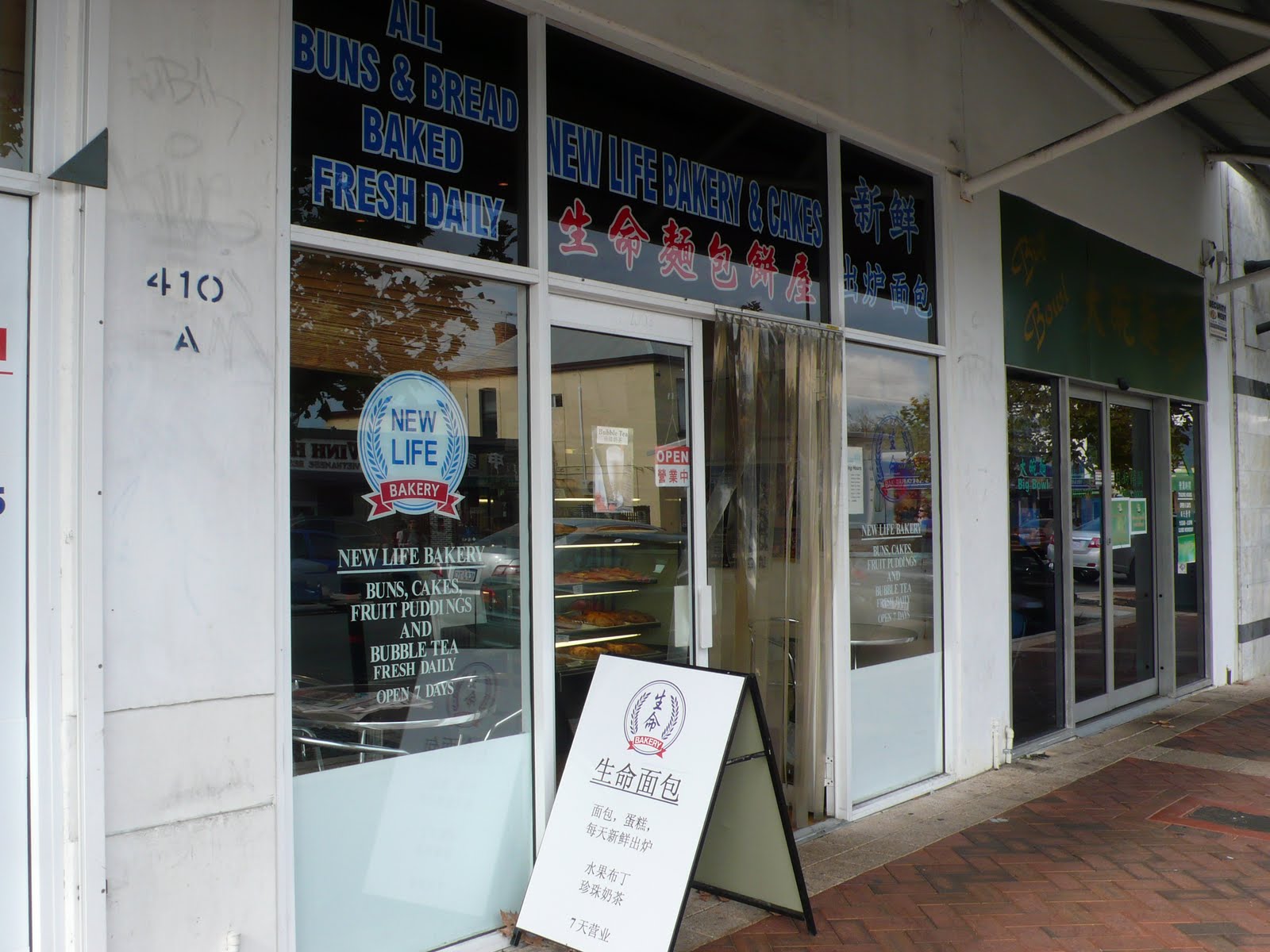
You can buy husband and wife biscuits at Chinese bakeries. The best place to purchase these biscuits in Perth is at New Life Bakery on William Street.


I personally like eating the husband biscuits more, I like its crumbly pastry.


Wife Biscuit


Chewy Salted Caramel Chocolates


Recipe from Gourmet Traveller


Ingredients
250g white sugar
250ml (1 cup) double cream
60g liquid glucose
30g butter
3 teaspoons sea salt
200g dark chocolate, coarsely chopped
Method
Place the sugar, cream, glucose, butter and 3 teaspoon of sea salt in a saucepan, stir over medium heat until sugar dissolves. Increase the heat to medium-high and boil until mixture reaches 118C on a thermometer (7-8 minutes).


Divide among 24 lightly buttered mini-muffin moulds and stand until firm (3-4 hours).
Melt chocolate in a heatproof bowl over a saucepan of simmering water, spoon over each caramel and stand till set.


Remove caramels from moulds and store in a single layer in a baking lined airtight container for up to 5 days.


Notes
The caramel tasted really good – nice, soft, chewy texture with a subtle hint of salt here and there. I used double cream with the highest amount of fat that I could find, the cream I bought had 56% of fat – it was so rich, thick and creamy.
However, I found that the caramels didn’t come out of the mini muffin moulds easily. I used a knife to go around the edges to loosen them out but the caramel was a bit stuck sometimes so I had to use a spoon to yank it out, and then clean and trim the caramels a bit.


I also found that the caramels didn’t hold up their shape very well and spread a bit. This is what it looked like the next day, they had spread and looked like caramel coloured scallops stuck to each other. 
I need to make the caramel stronger and hold better next time. What do I need to do? Add more glucose? Boil the mixture to a higher temperature?

Thursday, June 17, 2010

Things that I have learnt #1

I have been serious about cooking for 2-3 years now and overtime I have learnt a lot and I am becoming a better cook. So here are a few things that I have learnt which I would like to share. 


Egg freshness 


One of the most useful things that I have learnt was how to test the freshness of an egg. The egg as a whole looses moisture through its porous shell, so the contents of the egg shrink, and the air cell within the egg expands. This moisture loss can be used to determine the freshness of an egg. 


To test if your eggs are still fresh – fill a fairly deep bowl (or pot) with water and carefully lower the eggs into the water. 


A very fresh egg will immediately sink to the bottom. This is because the air cell within the egg is very small. 


As an egg ages and looses its freshness, its air cell expands and it will rise in the water and actually float! If the egg floats this means that it is very old and should be discarded.


It’s like Magic!


Tomatoes 


Tomatoes are also called “love apples” because of the belief in the tomato’s aphrodisiacal powers – apparently it can arouse passion?! (so maybe next Valentines Day you should give your partner a dozen tomatoes instead of roses)


I love eating tomatoes and I always find new ways to cook them and enhance/develop its flavour. 


I threw away all my cans of diced tomatoes when I learnt the technique of blanching and peeling tomatoes. I find that using fresh diced tomatoes for pasta sauces and stews tastes a lot better.  


When I cook with tomatoes, I usually take out the seeds and guts of the tomato because I learnt from a friend that the majority of the flavour of the tomato resides in the flesh, whilst the bitterness resides in the skin, seeds and jelly. 


I also learnt that you have to be careful when you chop tomatoes, when you knife it, it propels juice at you.


Burning butter


Sometimes butter is used for frying and sautéing but the disadvantage is that it burns as its milk solids brown and burn at around 150C, below the smoke points of many vegetable oils. I used to add oil to butter when cooking because I thought that it would reduce the possibility of the butter burning. But then I learnt from reading On Food and Cooking that adding oil to butter does not improve its heat resistance. The only way that butter will not burn is if you clarify it of milk solids by melting the butter and allowing it to separate. Then skim off the milk solids that float to the top and gently pour the butter off of the milk solids which have settled to the bottom. 


Or you can buy already clarified butter from the shops aka GHEE.


I was watching Nigella’s Feast one day on TV and to my horror she was frying something using butter and adding in some oil, and then telling people that she added in the oil so that the butter would not burn! (I was like bulls**t.) I couldn’t believe that she was telling people this like it was a fact and it was completely wrong! It totally annoyed me.


Another thing that erked me when I was watching Nigella Feasts was that she used a food processor to make a chocolate cake! I feel that a food processor is not the right piece of equipment to use to make a cake. You’ve got an electric mixer and now you can get fancy stand mixers – these are intended for mixing, folding, beating and whipping food ingredients! A food processor is similar to a blender and you would not make a cake using a blender (well I wouldn’t). It’s just weird I guess and it’s not like she is consistent either, sometimes she would use a stand mixer so what’s the point of using a food processor to make a cake? Maybe because it’s a little bit fancy like Twinings tea?


VS

VS


So two more things I have learnt is that butter burns and Nigella annoys me… 


Seasoning


Overtime I have become stronger in my seasoning of food, but I don’t over-season (well I try not to) – it’s all about balance but also making sure that the dish ‘packs a punch’. 


If a recipe asks for a pinch of salt – what’s a pinch? I used to add a little pinch and now I add a much bigger pinch. When I first started cooking I would lightly season food because I was concerned with over-seasoning and putting in too much salt or something, but nowadays I feel much more confident and I’m more generous in my seasoning. The food that I cook now compared to the food that I use to cook tastes a lot better. I don’t hold back. I guess this is also because I appreciate what the addition of salt or fish sauce and other condiments can add to a dish and I know that if I over-season something a little, I know how I could fix it. I definitely appreciate foods which have fuller flavours and a whole mouth feel rather than something tasteless and bland.


I have learnt to not be afraid of seasoning food!

Monday, June 14, 2010

A guide to making awesome scones.

One of the most satisfying things to eat has to be a simple plain scone with jam and cream.
The key to making perfect scones is to work lightly and quickly, don’t overmix the dough as the scones will become tough.


Here is a great scone recipe which I got from my favourite website for baking recipes - The Joy of Baking, I have made some additions to the method and provided step by step pictures and some tips.


These scones have a nice crusty exterior with a light and soft interior which has a rich buttery flavour.


Ingredients
2 cups plain flour, sifted
¼ cup caster sugar
2 teaspoons baking powder
¼ salt
80g cold unsalted butter
1 large egg, lightly beaten
1 teaspoon vanilla extract
½ cup cream (ie: whipping cream)


(The butter and cream should be used cold - straight from the fridge)


Method
Preheat oven to 200C and line baking trays with greaseproof paper. 
Cut the butter into small pieces. In a large bowl, whisk together the flour, sugar, baking powder and salt. 
With the tips of your fingers, rub the butter into the flour mixture until it forms coarse crumbs. (You can use a food processor for this step but many recipes recommend mixing by hand to prevent overmixing the dough. It is important that the butter is cold when it is worked into the flour mixture so that is becomes small flour coated crumbs and not a smooth dough. This process is similar to how a pie pastry dough is made and gives the biscuit a wonderful delicate and flaky texture)
In a small measuring cup, combine the cream, beaten egg and vanilla. Add this mixture into the flour mixture.
Use a pastry knife (a knife that has rounded edges) to cut/mix the liquid into the flour mixture until just combined and you get a lumpy, soft, sticky doughy texture.
Lightly flour work surface and your hands. Gather up the dough mixture from the bowl in your hands and press it together into a cohesive mass, and then put it onto the floured work surface, and knead quickly and lightly until the dough is nice and smooth. (Only knead for a minute or so, just enough to shape it into a rough ball, be careful not to overwork it or you will end up with a tough scone)
Use you hands to gently press/pat the dough out to about 2-3cm thick.
Cut the dough into rounds with a cookie cutter (slowly twisting the cutter into the dough rather then pushing it straight through as this produces higher scones). Dip the cutter into some flour before each cut (so the dough doesn’t stick to the cutter and it will come out easier). Press together the remaining dough and cut out more rounds. 
Place the rounds onto a baking tray. (Scones that are placed closer together, that is, almost touching will have softer sides and their crusts will be less crispy, if you place the scones further apart, they will be crusty all over). Brush the tops of the scones with a little cream (this helps to brown the tops of the scones during baking).
Bake the scones for about 12-15 minutes until they have risen and are golden, and a toothpick inserted in the center comes out clean. 
(Not the prettiest looking scones, but they taste amazing!)


Served split open with jam and crème fraiche! 
Yum!